
Current Sky Event
The Perseid Meteor Shower Is Returning
Every August, Earth passes through a stream of ancient debris left behind by Comet Swift-Tuttle. In 2026, the Perseid Meteor Shower is expected to peak under excellent dark-sky conditions, making it one of the most exciting sky events of the year.
When Does the Perseid Meteor Shower Peak?
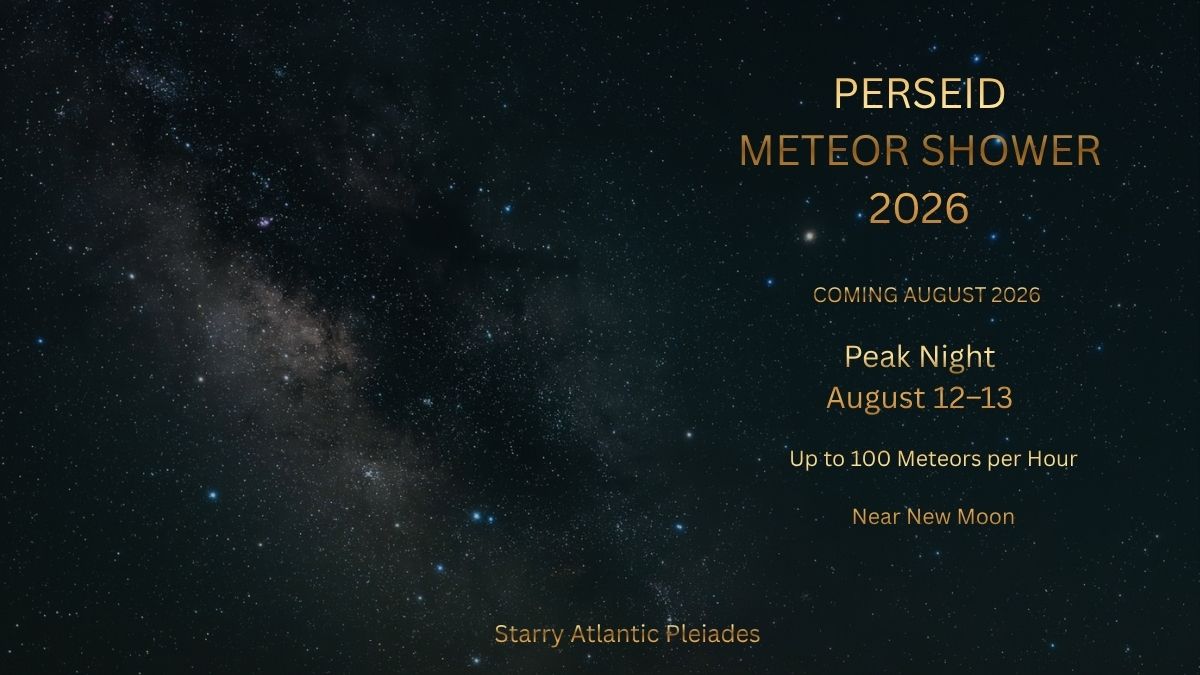
The Perseids are expected to peak during the night of August 12 and the early morning hours of August 13, 2026. The shower is active from mid-July through late August, but the peak night usually offers the highest number of meteors.
Why 2026 Is Special
The 2026 Perseid peak occurs with little to no moonlight interference, which means darker skies and better chances of seeing faint meteors. Under ideal dark-sky conditions, the Perseids can produce up to around 100 meteors per hour.
Where to Look
Although the meteors appear to radiate from the constellation Perseus, you do not need to look directly at Perseus. The best approach is to find a wide-open dark sky, lie back, and watch as much of the sky as possible.
Viewing Tips
- Get away from city lights.
- Allow your eyes 20–30 minutes to adjust to the dark.
- Look after midnight and into the early morning hours.
- Bring a reclining chair or blanket.
- Avoid looking at your phone unless using a red-light mode.
Tips for Astrophotographers
- Use a wide-angle lens.
- Focus manually on a bright star.
- Shoot continuously throughout the night.
- Use a sturdy tripod.
- Capture RAW files for better editing flexibility.
Looking Ahead
With favorable moon conditions and a reliable annual meteor shower, the 2026 Perseids could be one of the best sky events of the year. Whether observing from a backyard or traveling to a dark-sky location, this is a night worth marking on the calendar.